
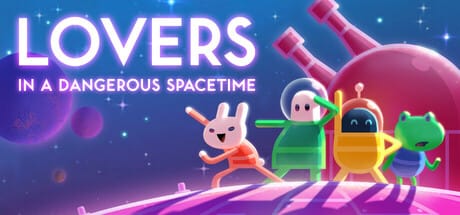


Bottom Line: Asteroid Base built a co-op machine that turns communication breakdown into comedy and teamwork into genuine delight. A decade on, it remains one of the finest local multiplayer games ever shipped — just don't expect the magic to survive playing it alone.
The Gameplay Loop
The loop is deceptively simple: enter a procedurally-arranged level, free caged space-bunnies, survive escalating enemy waves, reach the exit, fight a boss every few stages. On paper, that's a checklist. In practice, the ship transforms every objective into a logistics crisis.
Consider a routine encounter. Enemies approach from the lower-left. Your bottom turret covers that arc — but the shield is parked topside from the last skirmish, the ship is drifting toward an asteroid, and someone left the map station to grab a gem. In a normal shooter, this is a solved problem: you aim, you fire. Here, it's a negotiation. Who takes the turret? Who rotates the shield? Is the pilot allowed to just ram the asteroid to save time? (No. The pilot is never allowed. The pilot always does it anyway.)
This is where Asteroid Base's design intelligence shows. The ship's circular geometry means every station covers only a slice of the battlefield, so threats from multiple vectors force genuine triage. The game manufactures emergencies at exactly the rate a group of four can almost — almost — handle. That "almost" is the engine of the entire experience. Voice communication isn't a feature bolted on top; it's the primary input device.
Depth Where You Don't Expect It
The gem system deserves more credit than it usually gets. Because gems modify individual stations rather than the whole ship, crews make real strategic choices: do you super-charge one turret into a beam weapon and assign a dedicated gunner, or spread upgrades evenly so anyone can fight from anywhere? Different crews develop different doctrines, and the unlockable ships — with their rearranged interiors — force those doctrines to be renegotiated. For a game this approachable, there's a surprising amount of build strategy under the hood.
The onboarding is equally sharp. Controls are two buttons and a stick. A seven-year-old can man a turret; a lapsed gamer can pilot. The complexity lives entirely in the coordination layer, not the input layer, which is precisely why it works at parties. Low floor, high chaos.
Where It Frays
Now the firm part. The four campaigns lean hard on the same structural template, and by the third, the procedurally-arranged levels start revealing their seams — the same enemy compositions, the same rescue-then-exit rhythm. The bosses inject welcome spikes of spectacle, but the connective tissue between them can sag on longer sessions. This is a game best consumed in ninety-minute bursts, not weekend marathons.
The solo mode is a bigger problem. The AI pet is a clever patch — you point, it mans a station — but it converts a game about frantic verbal negotiation into a game about menu-adjacent micromanagement. It's competent. It is not the game. Reviewing Lovers solo is like reviewing a seesaw alone: the mechanism functions, but the point is missing.
And then there's the omission that has stung since 2015: no online co-op. In an era where every party game from Overcooked 2 onward shipped with netplay, its absence here is genuinely limiting. Asteroid Base's position — that the game is designed for shared physical space — is philosophically coherent and practically frustrating. Remote friends are simply locked out, Steam Remote Play workarounds notwithstanding.