
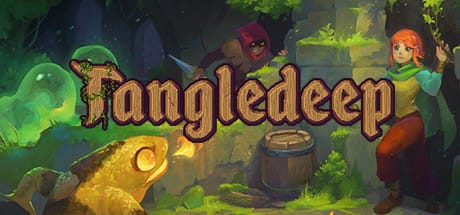


Bottom Line: Tangledeep is one of the most generous, mechanically dense roguelikes of its generation — a 16-bit dungeon crawler that respects both the genre purist and the player who just wants to see the ending. It buries its rough edges under so many good ideas that you'll forgive the grind. Mostly.
The Gameplay Loop
Tangledeep's turn-based combat looks simple — grid, bump-attack, hotbar — and reveals its depth the way good roguelikes do: through consequences. Monsters telegraph area attacks a turn ahead. Champion enemies carry modifier suffixes that demand actual tactical reads, not stat checks. Positioning matters because nearly every job has a movement verb: the Sword Dancer flows between tiles leaving damaging afterimages, the Budoka wants to be surrounded, the HuSyn deploys a mechanical anchor and fights around it. By mid-game, a single floor plays less like classic Rogue and more like a compressed tactics battle.
The job system is where the game earns its hours. Because skills persist across job changes, the real metagame is sequencing: start as a Paladin for survivability, detour through Spellshaper for utility, finish as something entirely your own. This is the build variety the marketing promises, and for once the marketing undersells it — the interactions between passive skills from disparate trees produce genuinely emergent combinations. It also produces the game's first real criticism: onboarding friction. Tangledeep front-loads an enormous amount of system surface — jobs, skills, flasks, cooking, taming, dreamcasting, banking — and its tutorialization is a polite series of NPC monologues that most players will click through. Expect to spend your first run confused and your second run enlightened. The game trusts you to get there. Not everyone will.
The Systems Around the Systems
The Monster Corral deserves specific praise because it solves a roguelike design problem nobody asked it to solve: attachment. Traditional roguelikes are disposable by design; nothing persists, so nothing matters emotionally. Tangledeep lets you capture a monster, feed it, watch its personality develop, and bring it into battle as a companion. Breeding two captured creatures produces offspring with blended traits. Suddenly there's a thing in this permadeath-adjacent world you actually care about protecting, and the game is smarter for it.
Item Dreams are the other standout — recursive dungeon design used as an upgrade economy. The risk-reward calculus is sharp: push deeper into a dream for bigger enchantments, or bank your gains before the dream kills you and damages the item. It converts loot from a slot-machine outcome into a project.
Where the design stumbles is pacing. The late game gets grindy, and the community consensus on this point is correct. Once your build comes online, floors start blurring together, and the difficulty curve — mostly fair — spikes hard at specific bosses in ways that feel less like tests of skill and more like checks against whether you happened to bring the right consumables. In hardcore mode, one such spike can end fifteen hours of investment. That's the genre contract, sure. But Tangledeep is otherwise so thoughtful about player time that these moments feel like lapses rather than philosophy.
Adventure Mode is the release valve, and it's the game's most important feature. Removing permadeath from a roguelike sounds like heresy; in practice it converts Tangledeep into a superb tactical RPG with procedural levels, and the death penalties that remain keep tension intact. This is how you grow a genre's audience — not by dumbing down the combat, but by making failure survivable.