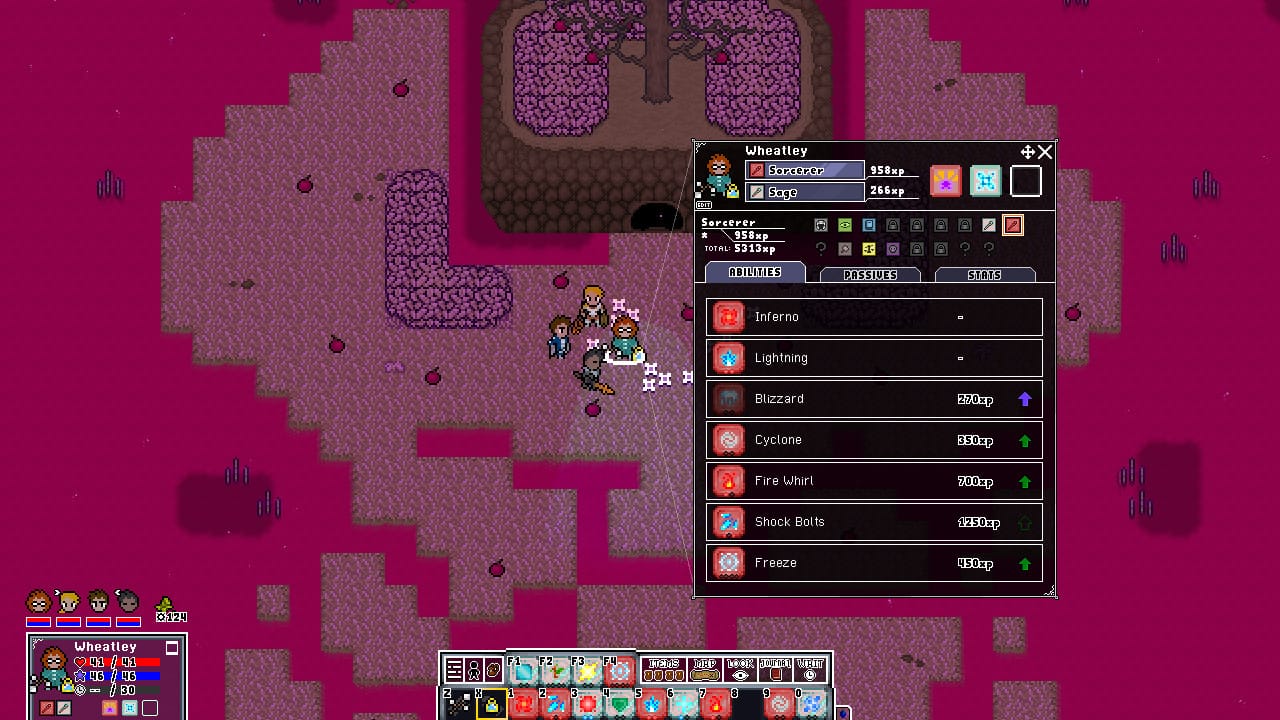



Bottom Line: A solo developer out-designed most of the tactics genre with a $14.99 game that looks like it shipped in 1998. If you can see past the pixels, Voidspire Tactics offers class-building depth and exploratory freedom that studios ten times its size still haven't matched.
The Class System Is the Game
Most tactics games treat character progression as a reward schedule. Voidspire treats it as the core verb. You start with three base archetypes and four races, and within a few hours the class web opens up: 18 jobs whose abilities you learn, upgrade, and carry across class changes. The system rewards experimentation rather than optimization-by-wiki. A Shiftcloak dipping into sorcery isn't a gimmick build; it's a legitimate answer to a specific battlefield problem, and the game keeps generating problems that make you rethink your answers.
The crucial design decision is that abilities are upgradeable, not just collectible. In lesser job systems, multiclassing produces a shallow puddle of level-one skills. Here, investment compounds. That single choice keeps the 100+ ability catalog from collapsing into noise.
Exploration as System, Not Set Dressing
The out-of-combat ability use deserves more attention than a bullet point, because it changes the psychology of the entire game. In a standard tactics RPG, the overworld is a hallway. In Voidspire, every wall is a question: can my party get through this? Sometimes the answer is "not yet," and that's where the nonlinearity earns its keep. The world is gated by capability rather than by plot flags — closer to a Metroidvania than to Final Fantasy Tactics — and because capabilities come from a class system you control, you decide which gates open first.
The secrets are the payoff. This is a game that hides rooms behind excavatable walls and rewards the player who tests every suspicious cliff face with a vine spell. Steam reviewers consistently cite the exploration as the hook that kept them playing, and they're right. The loop of build party → unlock traversal option → find secret → find gear that enables new build is self-reinforcing in a way few games in this genre even attempt.
Combat That Respects the Map
The battlefield interactions are the flashy half of the design, and they mostly deliver. Fire spreading through dry grass toward your own archer is a real tactical consideration, not a scripted event. Lightning arcing through water punishes lazy positioning. Destructible terrain means chokepoints are suggestions, not rules — a Warrior with the right skill can simply make a new door. Difficulty is honest: encounters expect you to use the toolkit, and a party built without synergy will stall.
The friction, such as it is, comes from presentation. The UI is utilitarian — functional, legible, and completely uninterested in charming you. Menus do their job and nothing more. Ability tooltips carry the information you need, but the game asks you to hold a lot of system knowledge in your head, and the interface doesn't work hard to lighten that load. Onboarding is trial by fire in the literal sense; players raised on modern tutorialization will feel the cold water. I'd call that a flaw with a silver lining. The game trusts you, and trust is in short supply.